A metal push button switch is one of the smallest components on an industrial control panel.
But I’ve seen projects delayed because of it.
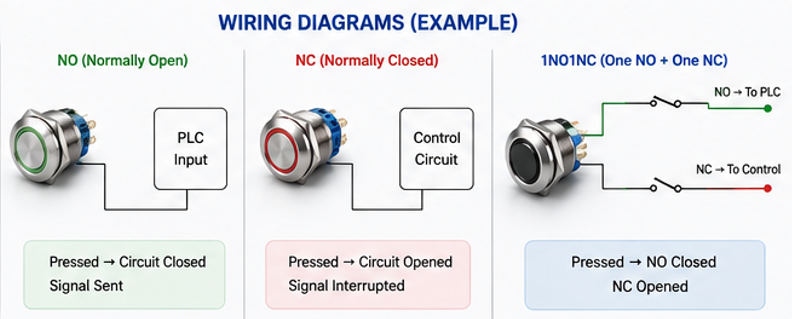
A 22 mm mounting hole matched perfectly, yet the panel wasn’t thick enough for the thread length. A machine builder selected a Normally Open (NO) contact when the control logic required Normally Closed (NC). An outdoor charging station used a switch with an IP rating that only applied to the front panel, leading to moisture issues after installation.
None of these problems were caused by defective products.
They were caused by selecting the wrong product for the application.
Although many metal push button switches look almost identical, the differences behind the panel can significantly affect installation, reliability, and long-term performance.
If you’re sourcing switches for industrial equipment, automation systems, or OEM projects, here are the key factors worth considering before placing an order.
Why the Right Metal Push Button Switch Matters
In industrial equipment, a push button is more than just a user interface.
It becomes part of the machine’s control system.
The right switch helps improve:
- Reliable equipment operation
- Faster installation
- Easier maintenance
- Better operator experience
- Longer service life
The wrong switch can result in wiring changes, unexpected downtime, engineering revisions, or replacement costs that far exceed the price of the switch itself.
More Than Just a Metal Push Button Switch
A metal push button switch is an electromechanical device that changes the state of an electrical circuit when operated.
From the front, two switches may appear identical.
Behind the panel, however, they can differ in:
- Operating method
- Contact configuration
- Electrical rating
- LED voltage
- Terminal type
- Protection level
- Mounting depth
This is why appearance alone should never determine product selection.
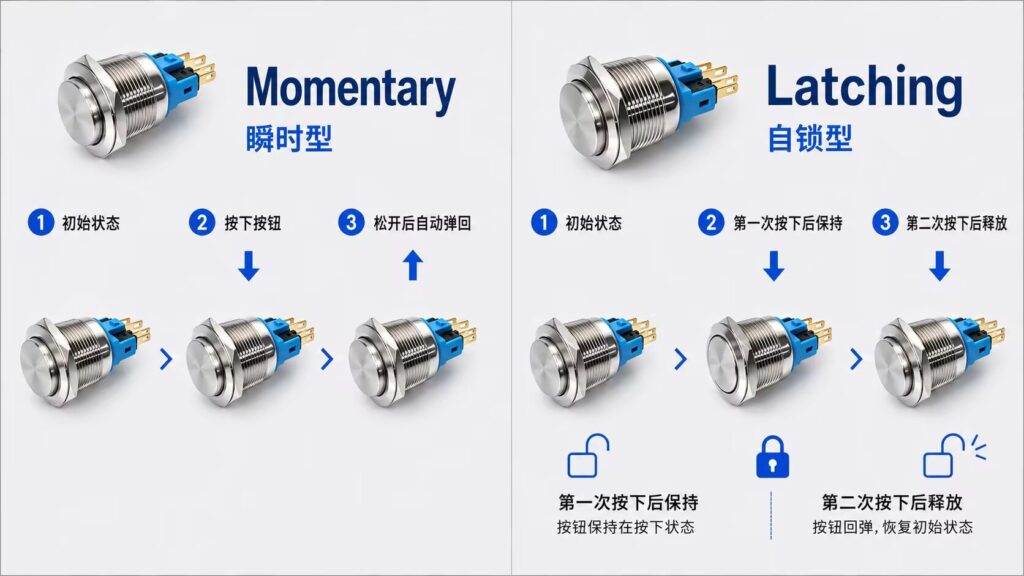
Momentary or Latching Metal Push Button Switch? Start with the Control Logic
One of the first decisions is whether the application requires momentary or latching operation.
A momentary push button returns to its original position after release. It is commonly used for:
- Machine Start
- Reset
- Door Release
- PLC Signal Input
- Jog Control
A latching push button remains in its changed position until pressed again or reset through another mechanism.
Typical applications include:
- Equipment Power ON/OFF
- Manual Mode Selection
- Lighting Control
- Function Switching
The important point is this:
The operating method should follow the control logic—not personal preference.
Engineers Don’t Choose a Push Button Switch by Appearance
One misconception I often see is assuming every 22 mm push button is interchangeable.
In reality, two products with the same mounting diameter may have completely different:
- Thread length
- Panel thickness requirements
- Body depth
- Contact modules
- Terminal orientation
- Wiring space
For machine builders working with compact control cabinets, these differences can determine whether installation is straightforward or unexpectedly complicated.
Three Common Mistakes Buyers Make
1. Focusing Only on Mounting Diameter
The mounting hole is only one part of the installation.
Always confirm:
- Panel thickness
- Available depth behind the panel
- Head diameter
- Thread length
- Terminal clearance
Small dimensional differences can become major installation issues.
2. Ignoring the Electrical Load
Many push buttons are designed to provide a control signal rather than switch high-power loads directly.
When controlling motors, heaters, solenoids, or other demanding loads, it’s often better to operate a relay, contactor, or PLC input instead of switching the main circuit directly.
Matching the electrical rating to the actual application is just as important as selecting the correct size.
3. Assuming Every IP Rating Means the Same Thing
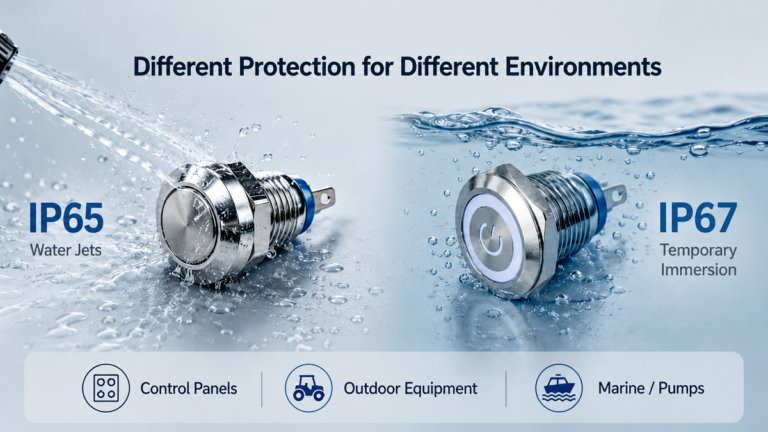
A switch advertised as IP67 may only achieve that rating on the front side after correct installation.
Outdoor equipment, food-processing machinery, marine applications, and EV charging stations often require additional consideration of sealing performance, installation quality, and long-term environmental exposure.
Understanding exactly what the IP rating covers helps prevent costly field failures.
Real-World Applications
Although the same switch may be used across multiple industries, the requirements are often very different.
Industrial Automation
Reliable Start, Stop, and Reset functions integrated with PLC-controlled systems.
CNC Equipment
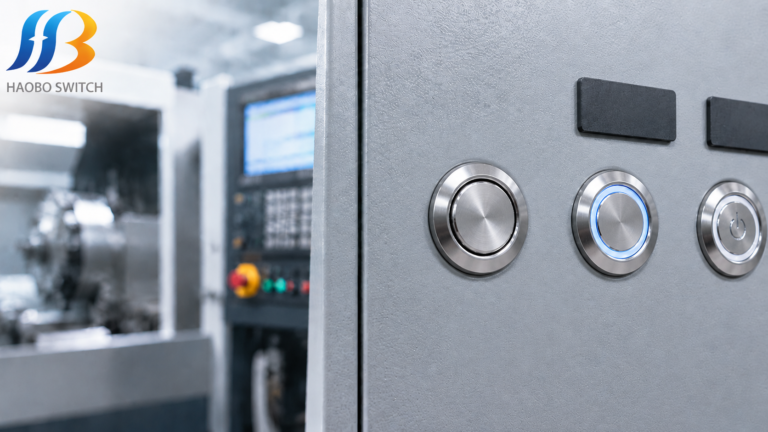
Momentary buttons for cycle start, feed hold, and machine reset.
EV Charging Stations
Illuminated push buttons that remain visible in outdoor environments while meeting environmental protection requirements.
Coffee Machines and Beverage Equipment
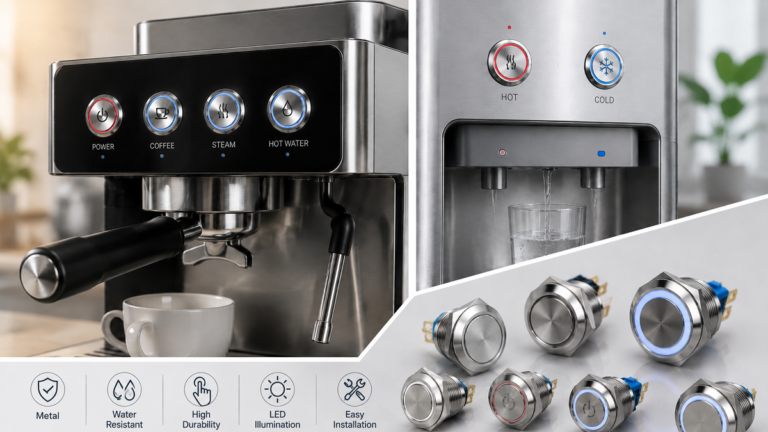
Stainless steel push buttons that provide durability, corrosion resistance, and an easy-to-clean surface.
Access Control Systems
Momentary switches for door release and entry management.
The application—not the appearance—should determine the specification.
Questions Worth Asking Before Requesting a Quotation
Providing complete application information allows suppliers to recommend a more suitable solution and helps avoid unnecessary revisions later.
Before requesting samples or quotations, it’s helpful to prepare:
- Mounting diameter
- Panel thickness
- Momentary or latching operation
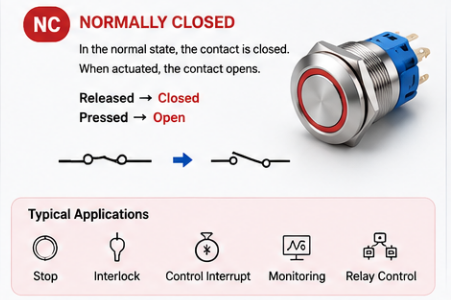
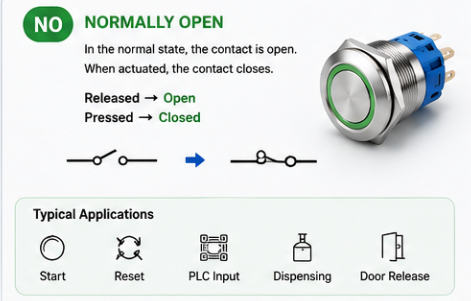
- NO, NC, or combined contacts
- Rated voltage and current
- AC or DC supply
- LED voltage and color
- Terminal type
- IP protection requirement
- Working environment
- Expected switching frequency
The more complete the information, the more accurate the recommendation.
Final Thoughts
A metal push button switch may represent only a small percentage of a machine’s total cost.
Yet it directly influences installation efficiency, operator experience, maintenance, and long-term reliability.
Good engineering isn’t about choosing the most expensive component.
It’s about choosing the component that best fits the application.
In many projects, that’s the difference between a smooth installation and an expensive lesson learned.
I’m curious—when your team specifies a metal push button switch, what is the first factor you evaluate: electrical rating, operating type, IP protection, or installation dimensions? Share your experience in the comments.