What Is a Metal Push Button Switch? Types, Functions, and Applications
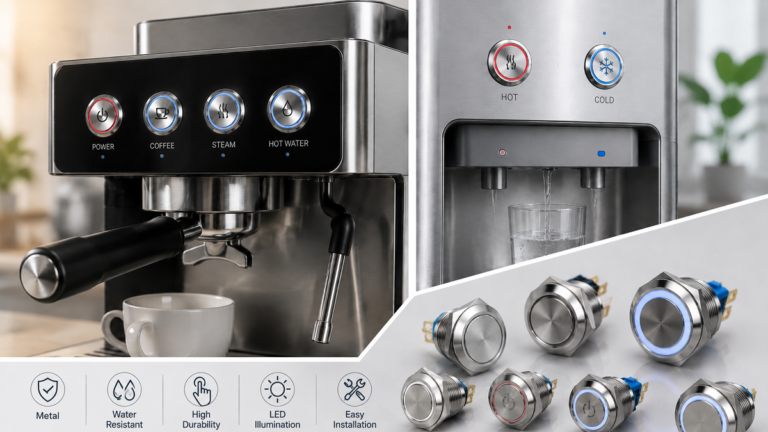
Metal push buttons are widely used in industrial machinery, automation panels, access control systems, CNC equipment, coffee machines, charging stations, and electronic devices. They allow operators to start, stop, reset, or change equipment functions directly from a control panel.
Understanding how a metal push button switch works helps engineers, equipment manufacturers, distributors, and buyers choose a suitable model for the installation dimensions, control logic, electrical load, and working environment. Although many products look similar, their operating methods, contact configurations, LED specifications, materials, and protection levels can differ.
-1-1024x683.png)
What Is a Metal Push Button Switch?
A Metal Push Button Switch is an electromechanical control device that opens, closes, or changes the state of an electrical circuit when the operator actuates the button.
Depending on the design, it may include a metal actuator, bezel, or housing, together with an internal operating mechanism, electrical contacts, terminals, and mounting components. Illuminated models may also include an LED module and a translucent lighting area or symbol.
The metal exterior can provide mechanical protection, a durable appearance, and a clean panel finish. However, the housing material does not determine the electrical ratings of the internal contacts. Rated voltage, rated current, load type, and switching performance must still be checked according to the product specifications.
How Does a Metal Push Button Switch Work?
When the button is actuated, the internal mechanism changes the position of the electrical contacts. Depending on the contact configuration, the circuit may open, close, or switch between different states.
A normally open contact, marked NO, remains open in its normal position and closes when the button is actuated. It is commonly used for machine start, confirmation, door release, and signal-input functions.
A normally closed contact, marked NC, remains closed in its normal position and opens when the button is actuated. It is often used in stop, monitoring, and control circuits.
Some models provide a 1NO1NC arrangement or multiple contact blocks, allowing one button operation to control more than one circuit.
The operating method and contact configuration are separate specifications. A momentary button is not necessarily equipped only with normally open contacts, and a latching button is not necessarily equipped only with normally closed contacts.
Momentary and Latching Operation
A momentary push button changes its contact state only while it is being operated. After release, an internal spring returns the actuator and contacts to their original positions.
Momentary models are commonly used for:
- Machine start and stop commands
- Reset and confirmation functions
- CNC jog control
- Door-release systems
- PLC or relay signal inputs
A machine may continue operating after the momentary button is released. In this situation, a PLC, relay, contactor, or electronic controller maintains the operating state rather than the button itself.
A latching or maintained button keeps its changed mechanical position or contact state after release. A common push-on, push-off design changes state after the first press and returns after the second press.
Other latching products may use rotation, pulling, a key, or another reset method. These models are commonly used for small equipment power control, lighting control, manual ON/OFF switching, function selection, and control panel mode switching.
The correct operating type depends on whether the equipment requires a temporary command or a maintained switching state.
Contact, LED, and Terminal Options
A Metal Push Button Switch may be available with NO, NC, 1NO1NC, or multiple-contact arrangements. The correct contact configuration should follow the equipment wiring diagram and control logic.
Illuminated models combine electrical switching with visual status indication. Common illuminated designs include:
- Ring illumination
- Dot illumination
- Power-symbol illumination
LED colors may include red, green, yellow, blue, and white. The selected color should match the equipment status logic and remain consistent across the control panel.
For example, red may indicate a fault or alarm, green may indicate normal operation, and yellow may indicate a warning or condition requiring attention. The exact meaning should follow the equipment design and applicable industry requirements.
The LED circuit and switching contacts may have different electrical requirements. Depending on the product structure and wiring method, the LED may indicate:
- Power ON status
- Button operation
- Machine running status
- Alarm conditions
- A PLC-controlled signal
Terminal options may include solder terminals, screw terminals, plug-in terminals, or pre-wired leads. The correct terminal type depends on the assembly method, maintenance requirements, and available wiring space.
-1-1024x768.png)
Materials, Sizes, and Protection
Common materials include stainless steel, nickel-plated brass, and aluminum. Each material provides a different balance of mechanical strength, appearance, corrosion resistance, and cost.
Depending on the product series, common mounting hole sizes may include:
- 8 mm
- 12 mm
- 16 mm
- 19 mm
- 22 mm
- 25 mm
- 30 mm
- 40 mm
The mounting diameter is not the only installation factor. Buyers should also check:
- Panel thickness
- Thread length
- Button body depth
- Head diameter
- Terminal position
- Available space behind the panel
Two products with the same mounting diameter may still have different body lengths or wiring requirements.
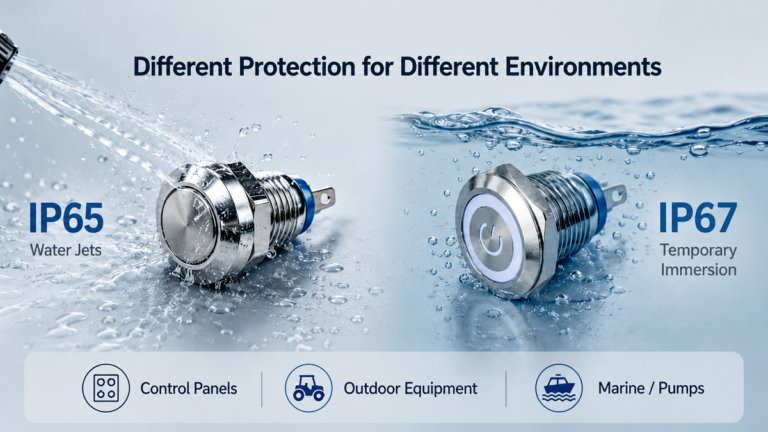
For applications exposed to water, dust, oil, cleaning processes, or outdoor conditions, the IP protection level is important. Buyers should confirm whether the stated IP rating applies to the front of a correctly installed button or to the complete product.
Correct installation, an undamaged sealing ring, and proper tightening are also important for achieving the intended protection performance.
-1024x765.jpg)
Common Applications
A Metal Push Button Switch is commonly used in:
- Industrial machinery and automation panels
- CNC machines and production equipment
- Access control and door-release systems
- Electric vehicle charging stations
- Coffee machines and water dispensers
- Test instruments and electronic devices
- Building automation systems
- Public control panels
The same external design may be available with different operating methods, contact arrangements, LED voltages, terminal styles, and protection levels. Appearance alone is therefore not enough to identify the correct product.
How to Choose the Correct Product
Before requesting a quotation or ordering samples, confirm the following information:
- Mounting diameter and panel thickness
- Momentary or latching operation
- NO, NC, or combined contacts
- Rated voltage and rated current
- AC or DC power supply
- Load type
- LED voltage, color, and illumination style
- IP protection requirement
- Housing material and terminal type
- Operating frequency and working environment
For motors, heaters, solenoids, and other demanding loads, the button may need to control a relay, contactor, or electronic control module instead of switching the main load directly.
Providing complete application information helps the manufacturer recommend a suitable model and reduces the risk of installation, wiring, and operating errors.
Conclusion
Understanding what a metal push button switch is provides a practical foundation for product selection. A suitable product must fit the equipment panel, match the control logic, meet the electrical requirements, and withstand the actual operating environment.
A correctly specified Metal Push Button Switch can improve operating clarity, reduce installation mistakes, and support reliable equipment operation. Selecting the correct operating method, contact configuration, LED specification, protection level, and installation size is essential for long-term performance.